Friday, January 27, 2017

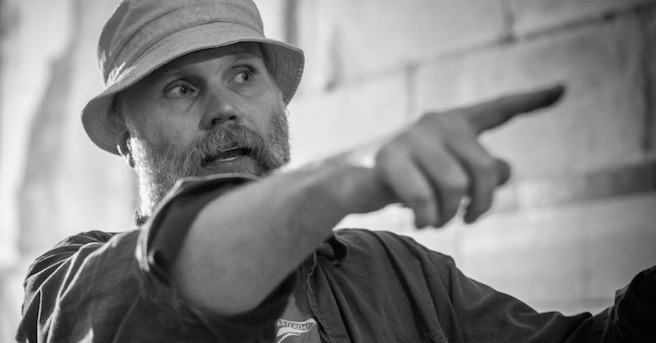
The Gospel of Marcus Nispel, Apostle of the Hollywood Horror Remake.


"It‘s not that we make these movies because we can‘t make something originally up on our own but because we appreciate that there‘s sort of a culture and an expectation that we can sort of screw with".


Undoubtedly, among defining phenomena of early 21st century horror has been Hollywood‘s taste for repackaging and rebooting former horror hits and classics. Majority of critics have branded them cynical and unoriginal while audiences than paid to see their icons repurposed and reimagined to suit the ever changing tide in hope of experiencing nostalgic terrors. And in the selective "pantheon" of those remakes I find the films of the German director Marcus Nispel the most embodying of all. Making an industry name for himself  directing commercials for big brands such as Coca-Cola and MTV, and music videos for #1 hits by Spice Girls, Cher and Elton John, Nispel‘s directorial sensibilities can easily be traced back to these works (my personal favorite perhaps being his videos for Elton John‘s Recover Your Soul and Puff Daddy‘s Victory). Dead leaves, the strong reliance on established larger-than-life characters pulling the center of the frame and occasionally religious iconography, specific use of shadows and hues... all elements that can be found scattered prominently among the films of his would-be film career. It‘s not surprising given Nispel‘s artistic tendencies that he received mentorship from the cinematographer of Tobe Hooper‘s original Texas Chainsaw Massacre, Daniel Pearl. Incidentally it was Pearl that would encourage protegé Nispel to take his first crack at the movie business in collaboration with himself when the offer came to remake what was Pearl‘s first work as a DP, the original Texas Chainsaw film.

Nispel‘s Texas Chainsaw is in among my ideal remakes, embracing that the original is not to be recreated, but repurposed for a new generation of horror audience.  Mostly an exercise in grotesque violence and hopelessness, Nispel‘s nihilism is more stated than in Hooper‘s kinetically ferocious but ritualistic original with the 2003 release date giving the recurrent abuse of authority a new layer. The family patriarch may dress himself as a man of the law but it is a shameless facade in front of the absolute moral corruption at the top of the authorial food chain. The unforgiving bursts of gnarly violence would draft an uncomfortable viewing experience for most on their own but for any viewer willing to engage with its ideologies, it‘s likely to add an oppressing dread to go with.


The 2003 remake of the Texas Chainsaw Massacre would end up a part of the final fashionable spirit of traditional slasher horror because in 2009, Rob Zombie's Halloween II left the nihilistic slasher horror of the 2000s in by removing the shackles off of the crowd-pleasing formalities of final girls and diving headfirst into one of the most devastating depictions of trauma in the subgenre and perhaps most importantly, injecting murder and unflinching violence with a degree of empathy seldom experienced in the genre on whole for the past decade. While i dare not claim 00s slasher horror was derived of freshness as there is evidence against that in films such as Glen Morgan‘s Black Christmas (2006) and Jaume Collet-Serra‘s House of Wax (2005), the impending doom of the traditional slasher as a fashionable enterprise could be felt as the decade came to a close.

And with his remake of 80s horror phenomena Friday the 13th, Nispel would craft an unintentional circumstantial swan-song for the slasher mere months before Zombie said its preliminary last rites. Cleverly opening with a summation of the narrative of the original and a short film-within-a-film, Nispel sets the stage for the franchise‘s now iconic poster-boy Jason Voorhees to lay on a new kind of pain on the new breed of self-righteous and insufferable teenagers that have plagued him since the early 1980s, as Nispel and returning collaborator/mentor Daniel Pearl take Crystal Lake to the next level. As I am not as well-versed in the previous near dozen entries in the franchise as I probably should be I'll assume Friday the 13th works better as a reconfiguration not merely of the original Parts 1-4 but as the whole lot of them (thankfully with the setting of Jason X strategically ignored). My image of Crystal Lake is a space of escapism for horny teens, wherein the sole inhabitant happens to be a towering hermit with a subtle Oedipus-complex and a taste for slashing, incidentally, said horny teens (escapism is an illusion etc. etc.). And Marcus Nispel‘s Friday the 13h holds up to that image perfectly well, while adding a couple of fresh layers of frosting on top. For the first time, Jason has to deal with the smartphone and GPS equipped teens of the generation Z, so Nispel and writer team Damian Shannon and  Mark Swift give Jason bear traps, a hidden underground lair that exorcises cellphone signals (exceptionally decorated and designed by Randy Huke and production designer Jeremy Conway) and a more formidable physique giving Jason the formidable ability of the power-walk  in addition to being able to lift a ton in weight without much difficulty.
Before and after he displays the raw leverage of his physical power (which pulls the frame like its own center of gravity) on the unsuspecting teens Pearl‘s digital cinematography allows Jason to blend in and dematerialize to „become one“ with Crystal Lake itself which has devolved into a desolate, decaying landmark and small barns with even more sexually frustrated loners seem to be the only surrounding residences in close proximity. For the amount of time Jason spends stalking and slaying, Friday the 13th briefly transfigures from an effective summation of a commercial franchise into a digital nu-giallo version of Mario Bava‘s A Bay of Blood, and it‘s in these sequences that Nispel unequivocally finds the true heart of his film. It resolves as a hymn for the slasher‘s of old while also paving new and exciting ground for mainstream horror cinema, which is why I remain unsurprised that slasher movies haven‘t been tinkered with too much for the past 7 years except in the low-budget obscurities that screen at film festivals and best-case scenario make it into theaters exclusively for limited runs.


Which leads us to Nispel‘s most recent foray into the horror genre, Exeter (alt. titled Backmask). After wowing to finally move into original territory and away from tinkering with fanboy expectations and nostalgia, Nispel was approached  by the writer of Paranormal Activity to make a million dollar horror flick with the and the prospect of almost total creative control on condition that it could not by any chance or circumstance be a remake or a found-footage joint, which the German director happily agreed to. 

The result is perhaps my favorite of Nispel‘s works, and the one where, with all the glitz and gloss of the Hollywood  machine removed Nispel has the freedom to let teens party to nu-metal in an abandoned asylum, take subtle a piss at the know-it-all culture of the internet and break down violence into an act of reversed empathy. How‘s that for a proper low-budget slasher movie in the 2010s?


“At the center of it, I want to see the young people who see these kinds of movies. In most exorcism movies, it’s usually very special people that it happens to; families and movie stars like Ellen Burstyn. I wanted it to happen to amateurs.”


Poising internet-equipped adolescents against a demonic summoning that leads to possession and eventually senseless brutality, the writer-director team interrogate and eventually debunk the supposed notion that current youth is corrupted to the point of absolute complacency. Instead the self-aware team of doomed protagonists all emit human qualities in a way only b-movies (on both the high- or low-budget end of the spectrum) will allow in today‘s horror landscape. The first act‘s Project X-lite party and its aftermath is a steady build to all hell breaking loose, the second flirts with parody but descends into a madness reminiscent of Sam Raimi‘s classic The Evil Dead allowing further introspection for the surviving leads, their internal trappings are at once eternal and modern, making Exeter a very fitting avatar for the current wave of slasher horror.


By the third act there is a natural progression to externalising the introspection into form and opposites as a twist reveals the antagonist of the piece not to be a force of true evil, but the broken humanity that inspires such myths. Nispel retrofits Laurie Strode‘s descent-into-madness arc in Zombie‘s Halloween II into flashbacks revealing a shortened but effective lesson in perception and more so a cry for empathy finally condensed in the conclusive lines.

"Bitch deserved it"

"No, she didn‘t"


Suck on that Cabin in the Woods.

RESIDENT EVIL: THE FINAL CHAPTER May Be Anderson's Greatest Artistic Statement


Paul and Milla deliver what may very well be the best Resident Evil film yet. It's constantly moving and operating with immaculate density and on a variety of levels crisscrossing between meta-cinema, religion, and its traditional anti-capitalist values, but never ceasing to engage in an arc that Anderson has been building since Afterlife. What will make or break the film for many fans will be the pacing. At 107 minutes, it's the longest RE film to date and it's never as tightly wound as Retribution, despite moving faster than a speeding bullet throughout its screentime. It's constantly trying to compress itself into under two hours, speeding up entire character arcs to play out in under fifteen minutes in order to kill them off immediately. An element meshing well with Alice's literal time limit to achieve her ultimate goal in saving the human race. Nevertheless, The Final Chapter is close to an indisputable masterpiece, and manages to be the densest, heaviest Resident Evil film to date.

I guess in retrospect watching the film finally makes me okay with the previously lame title of The Final Chapter. Because this isn't about "late-stage capitalism" but the final days of it, and everyone has a hand in bringing its final flight. Bodies are commodified, government is exorcised out of necessity while corporation takes its place, religion either fizzles away or self-destructs in a metal haze rolling furiously and in flames down a decrepit highway dragging non-believers behind. In the midst of all of this, Alice becomes not a messianic figure but doubles down on her commonness when it's revealed Alice really was 10 years old the entire time, a clone made of an Umbrella higher-up. An icon onto which humanity projects the traits that make us definitively human; a final remaining safeguard of empathy and love. In this regard, The Final Chapter is about the inevitability of class conflict, perhaps optimistic in its assumption of eventual success for the sub-proletariat. This reading does afford a plothole, however. If the apocalypse was truly orchestrated by the bourgeoisie than they failed to take into account that capitalism would be the downfall for many of them. For capitalism to survive, poverty must exist. Wealth must be drained from somewhere.

The Final Chapter's most radical change from Anderson's previous two outings is the use of editing and perspective. Gone are the clean, articulately composed slow-motion shots from Retribution that capture Alice from a distance, reeking of artificiality. The Final Chapter shows us Alice as our human center, littered with more traditionally realist flourishes including increased emphasis on handheld photography and frantic pacing. The editing is a lot less clean than in Retribution, and what feels like incompetence at first quickly reveals itself to be an act of poetry. Everything is obscured by the sing-song pace of cross-cutting during fight scenes that, as the film goes on, slowly start to distort time as well as space. Here Anderson represents his seven-year long deconstruction of cinematic tendencies. He was happy to destroy Hollywood in Afterlife, quick to dismantle cinema in Retribution, and finally, Anderson is desecrating the idea of image itself. Not only the cinematic image but the concept of image as we understand it. He does so by making the image unimportant and common in the most fascinating ways.
The concept of "Character is born, character dies, and character is reborn as agency no longer exists in this world" is not unfamiliar to the series, but The Final Chapter brings it to new heights, where everything is a copy of a copy.

Anderson's formal tendencies reveal something exciting up his sleeve. I've previously identified two "eras" within his filmography split roughly down the middle with Alien vs Predator but The Final Chapter, now backed with the thematic and formal corroboration of Pompeii, reveals that we may be on the cusp of Third-Era Anderson. The scale of The Final Chapter adamantly resists the claustrophobic tendencies of Anderson's previous work and feels more like a ballet of destruction a la Pompeii and perhaps even hints at the prospects of Monster Hunter. The hyperkinetic digital go-pro aesthetic often recalls something like a lost late Neveldine/Taylor piece where the deconstruction of masculinity is instead hijacked with Fury Road feminist communism.

Of its flaws, The Final Chapter sports far more story than a Resident Evil fan should be comfortable with and it struggles to hold its massive, cathartic, multiple endings into what's still the longest RE film to date. What many will find iffy is how quickly and unimportantly key character interactions are treated under the weight of its sheer thematic density. Despite all of this, it's still working on a multitude of levels that a single essay cannot denote and analyze them. If 2016 was the year of the craziest blockbusters, Resident Evil: The Final Chapter along with Split promises one of the smartest.

Haydn DePriest is a student at the University of Texas at Austin

Wednesday, January 11, 2017

Anonymity in NERVE & UNFRIENDED

The internet can be a scary place, or at least it for those not familiar enough to navigate it. Daunting with the amount of easily accessible knowledge, information, and porn that can be discovered, interpreted, and shared faster than ever before. Between Rachel Talalay's Ghost in the Machine and Kiyoshi Kurosawa's Pulse, it seems that such a present and established part of our lives even today continues to hold true "new" horror for the masses. But now we have social media, an entirely new platform where the everyday masses can coalesce along content creators, journalists, politicians and more on a colossal scale. With the creation of a platform, discussion on how to use that platform inevitably follows, and two films, whether they intended or not, threw their own hat into the ring. In both 2014's Unfriended and 2016's Nerve, anonymity is linked to base aggression. Anonymous masses utilizing new internet technology as a medium for expressing and achieving primal desires. These films aren't anti-internet or nostalgic for the past but rather take the same anxieties from the past and showcasing them through modern apparatuses and devices.

"Are you a watcher or a player?" a text-to-voice generator repeatedly asks of NERVE's users, embracing a dichotomy stemming from archetypal teenage anxiety. Will you live your life without apprehensions, without fear? Or will you relegate to the sidelines playing it safe? That's how Nerve sets itself up: as a medium for youth self-expression, not dissimilar from other social media platforms, even if that expression manifests itself from outside the screen into the physical world. Like many young adult-oriented films to come out, Nerve at first manifests itself as a story of found self, transitioning from youth to adulthood. Vee leaves the confines of the isolated Staten Island to find her destiny in the big city, with new clothes and a new, daring attitude. Before, she was timid and unable to make the potentially life-changing decision to go to CalArts, but now she's spunky and quirky and dares to do things others can't. On top of all that, she can measure this success quantifiably via the number of watchers she receives. So is the magic of social media to be used as a tool of self-validation.

And there's an even trade-off for the watchers. There is no reward without risk, but if there was? That's where NERVE comes in, a game "like truth or dare, minus the truth". Players get paid insane amounts of cash to complete death-defying dares against each other, presumably paid money collected from watchers. The game's dynamic serves as a testament to classical voyeurism in horror. It's peering through the windowsill, but now the window is multi-dimensional and the peeping toms many. In NERVE watchers are also allowed to engage in their base urges without fear of reprimand. There's a reason they're all shown wearing packs and moving in packs across the city following the players who are given the center-stage. Nerve really just is a very thinly veiled metaphor for contemporary online interactions, and what turns off a lot of critics is its complete and total lack of subtlety. There's no nuance here, this is a Lifetime original movie out on DMT, with the preachy, near-tragic ending to tie off any doubts about what this message film is about. Anonymity as aggression. When one is not beholden to an identity, inhibitions disappear. More likely to sentence someone to death for entertainment when not tied to the consequences.


In Unfriended, the sympathies don't reverse but the perspective does. The protagonists go from innocent to problematic, and the anonymity switches sides. Blaire and her friends all follow a standard high-school social set-up, aware of their own trespasses but unwitting to the trespasses against them. They each used anonymous accounts to tear down those around them for self-validation, and continued to act like everything was okay around each other. They toss around anonymous and toxic comments today like the infectious, malicious rumors of yesterday. Characters will publicly express disdain or dislike of another character right before talking to their face directly. Unfriended hinges on its construction of a social circle built on arbitrary social obligations and false friendships, not created by the new space but enhanced by it. When Billy227 shows up to begin their reign of terror, the source of the terror isn't in any of the on-screen deaths but the fact that their trespasses are exposed where they are forced to answer for them in front of those they trespassed against. Billy227's primary objective in Unfriended is not to kill the people first but to lay everything bare for the collective to see. At its heart, what makes Unfriended tick is the social drama that gives each death meaning.

And it works, because who hasn't had incriminating private messages behind people's backs? Or to provide a more antiquated analog, secret back-room discussions about mutual friends. There's moral relativity, sure. Not all of us have cheated on our boyfriends or spread rumors about our besties, but we've all trespassed against our friends. Many of us have committed these trespasses without them having ever been unearthed, even to this day. The protagonists aren't the protagonists because of mere adherence to the slasher formula, but because of their distant relatability. Their despicable actions are also a testament to the newness of the social technology the utilize. Without a history of action to draw from, there's no set code of ethics for many using these interfaces. Nerve draws heavily on this idea as well with the abuse depicted.

It's really in the protagonists where we start to see the difference between Nerve and Unfriended. Everyone in Nerve gets a free-pass morally because their environment is shown to have shaped their actions and character under the immense pressure of society. The players' vanity and recklessness are never fully critiqued as one might expect, and as some have noted, even feels vaguely anti-technology at points. Unfriended is a more thoughtful and nuanced analysis on how modern social spaces shape our actions. It's never an apologetic film, despite being a sympathetic one. Environment and social pressure can shape a person's actions, but it's always mutual. Technology never creates this social drama or tension, it only amplifies it. And when you remove that aspect from the situation, the artifice still remains, even if the anonymity cannot.

Haydn DePriest is a student at the University of Texas at Austin

Friday, January 6, 2017

UNDERWORLD: BLOOD WARS


6.7

"Where are the fans of Underworld?" I wondered, "Where are they hiding?". And I didn't mean just in looking at the empty seats left and right of me, but in the grand scope of things, who continues to demand Underworld films? The franchise has, prior to the release of Blood Wars, grossed nearly $500 million at the box office and sports five separate films and a series of anime spin-off shorts. Despite this, Underworld has exhibited nearly no social or cultural impact. It lacks the cultural significance of The Matrix Trilogy and the excessively dedicated fanbase of Resident Evil. And anything anyone ever felt about Wiseman's 2003 debut has vanished with time as the popularity of the "Matrix Clone" has dissipated. Whether positive or negative, people talk about The Matrix and Resident Evil. There's always a discussion to be had. No one talks about Underworld, and perhaps with good reason. The previous two franchises began as incredibly impassioned films from their respective creators and even the vapid original The Fast & The Furious had the soulful, misguided direction of Rob Cohen. Underworld's beginnings are so much more cynical, seemingly existing only to piggyback off the popularity of the wave of Matrix clones Screen Gems was pushing into theaters. Where Len Wiseman's films lack both passion and competence, so with Blood Wars it's nice to see someone actually giving a shit. 

Anna Foerster's direction isn't so much unwatchable (as one might expect from a veteran of a field as churlish as television) as it is totally baffling. Completely detached from any sense of contemporary cinematic language or even the revolutionary techniques of the series Underworld often imitates, under her direction, every scene becomes an action scene. The sing-song beat editing evident from the first motorcycle chase is transposed onto the scene of Semira and Vidar discussing the planned collection of power from beneath the elders seamlessly, and the entire film feels as if it's trying to squeeze into its ninety-minute runtime with issue. It moves swiftly through a series of quickly pasted together plot-points for the first hour as set-up for its climactic final two battles, one fought in a Vampire Stronghold in the Nordic region and another in the East, never missing a beat along the way. There's a handful of very exciting scenes whenever the film resorts to hand-to-hand combat and even more so during the final shootout. What's most refreshing for the Underworld universe is the introduction of some legitimately smart setpieces, including a scene where Lycans blow holes in the room during daytime while the Vampires weave in and out from under them.

What's most interesting, and also most destined to be ignored, is the character introduction of Semira. Who plays the narrative from behind the scenes the entire time. Consistently aware of trespasses against her but does not immediately exorcise them if there is something to be gained in the process. All true power comes from information, and Semira labels herself as a collector of such. A typical Matrix Clone posits itself as a hypermasculine symphony of violence, but leave it to a woman to have seriously learned a lesson from the Wachowskis.

Haydn DePriest is a student at the University of Texas at Austin. 

Sunday, January 1, 2017

JANUARY 2017: Modernique Horror

ANNOUNCING JANUARY’S THEME - For this month’s theme, our writers will be drawing their attention towards the current generation of directors working in modern American horror cinema. The focus of these pieces was originally exclusively set on covering a patch of these directors’ respective oeuvres while picking up on their relevance to the current wave of generational horror (the anxieties of the social media age) and taking note of some auteurist tendencies in their work. However, we decided instead on a more open approach so while you’ll be seeing strands of that DNA the still mainly horror-oriented aesthetic will have more variety, along with our steady flow of extra content. 
This month features pieces by Höddi Clausen, Dave Hefner, and Haydn DePriest. 

Tuesday, December 27, 2016

On Fear and Digital Expressionism In AFTER EARTH


Fear is not an alien theme in the films of M. Night Shyamalan. The auteur has explored fear of the intangible and tangible, the fear of chaos and the fear of complacency. In After Earth, Night brings fear to the forefront. What was originally conceived as a modern day-set vehicle for Will and Jaden Smith to star as a father and son stranded in the wilderness of Alaska, later turned into a high-concept, big budget science fiction film set on a "post-human" Earth. Smith Sr., serving as producer, was allegedly very involved in the screenwriting process and writer Gary Whitta was integrated into the pre-production by Smith himself who was impressed with his work on 2009‘s The Book of Eli. With Night being brought onto the project later on as director/writer the deviations between Night‘s more authorial works and After Earth can be felt, but only to a lesser extent as both the core father-son relationship and the personal journey Smith Jr.‘s Kitai undergoes during his near-suicide mission brush very close to what Night had been working with in his career up to that point. The way the narrative plays out feels more procedural and traditionally structured than Night usually lets on in his stories, but as with each of his succeeding films the development of previously gestured thematics is there. The film‘s title refers to a world that rejected the humanity that occupied it and has now become overgrown with dangerous wildlife. This calls back to The Happening‘s preoccupation with nature turning against us, albeit from a different angle, and The Village‘s community of people returning to a "simpler" life, as Kitai is challenged to work with broken tools and to live in coercion with the dangers of the natural world. The theme of regaining a purpose or "life“ in correlation with regaining a touch with nature has been touched upon countless of times in art, yet one unsettlingly feels it become frequently more relatable as a fantasy and as escapism than a reflection of reality, so setting the story of After Earth as a coming-of-age narrative potentially awards it further nuance. In this context Smith Jr.‘s Kitai is an apt continuation of The Last Airbender‘s Aang.


Yet another youngster forced to bear the burden of adults on his shoulder‘s (now with more external angst), Jaden‘s performance is brimming with emotion and earnesty. Night is aware enough of the young actor‘s strengths to know that letting his expressive eyes magnetize the attention in-frame is the strongest play because, arguably, he has made a Hollywood career out of relaying focus on his actors‘ strengths in the editing room. If previous performances hadn't convinced, Smith Sr. proves his charisma isn‘t reliant on movement or facial (all-caps) expression, but blinding confidence and aura as the screenplay has him trapped in a single location for the majority of the runtime. One‘s minds wanders towards his heavy and stern delivery of a speech Cypher makes to his son... "fear is a choice"... Smith is a pure movie star, able to embed the blunt dialogue that could be taken directly out of an AA pocket-manifesto with unpretentious dramatic flair and nuance. Cypher is a man without fear of the external and, by extension, a man who shuns emotion rooted in fear, but Smith‘s pauses and glances subtly ground him in humanity.

In retrospect, Cypher doesn't really serve a mentorial role to Kitai aside from his speech as much as that of an obstacle in Kita‘s mind. The father-son relationship is built around Kitai‘s feelings of inadequacy next to his fearless father, as he aims to prove to Cypher that he can overcome his demons like Cypher did his. He ends up succeeding not by consciously emulating or avoiding his father‘s triumphs, but by disobeying him. Kitai progresses to inner peace by interacting the antagonistic flora of Earth in his way. "He‘s a feeling boy" his mother says of him to Cypher, echoing both Prince Zuko‘s relationship with his father and his troubled emotional state ("He says I‘m like my mother") in Night‘s previous film The Last Airbender and like many of Night‘s prior protagonists Kitai succeeds in gaining control by letting his previously suppressed feelings flow outwards, he makes the decision to not let his traumatic past determine or immobilize his potential in the now. Only when he realizes fear is the one thing holding him back, not inadequacy, can he overcome the alien predator that caused him the trauma in the first place.


Giving credit where it is due, supporting players James Newton Howard (Night‘s go-to composer) and cinematographer Peter Suschitzky are invaluable to the emotional mise en scène of the narrative. Howard‘s previous collaboration with Night on The Last Airbender was a masterpiece, and while his score for After Earth doesn't reach those heights it weaves an unmissable tapestry around essential moments for highlighting (the magic a simple piano theme can work on otherwise silent moments...). The way Suschitzky captures the interiors of the utopian science fiction capitol world feels eerily similar to Janusz Kaminsky‘s work on Spielberg‘s A.I. with the illumination of grays and browns subtly reflecting on the faces of the protagonists while rendering the threshold between the practical and green screen sets close to invisible. Once the narrative reaches Earth these illuminations are scaled back and the green forest landscapes, the blue skies and occasional brushstrokes of white take over. Only when the screenplay pits Kitai against the CGI omen that haunts his memories does the color pallet revert back to the gray, with volcanic ashes overwhelming the frame around the young cadet and colliding his internal anxieties with his external ones. It‘s as classically expressionistic as modern blockbusters get.

But all things considered After Earth is a tentpole blockbuster only in budget and occasional scale. What Shyamalan, Whitta and the Smiths made is a coming-of-age action film more reminiscent of Rossellini‘s Journey To Italy and Malick‘s The New World than the modern blockbuster template, albeit in the now more frequently seen post-Phantom Menace/Attack of the Clones way. However unlikely, if After Earth ends up Night‘s last big-budgeted film in the current cycle of blockbuster cinema, it‘s an exemplary one.


Monday, December 19, 2016

On the "Flawed“ Beauty Of THE LAST AIRBENDER

"There are reasons each of us are born, we have to find those reasons"


Cited by many as the artistic low-point of his career, M. Night Shyamalan‘s commensurate of Orson Welles‘ The Magnificent Ambersons and in certain context, perhaps Joel Schumacher‘s 2004 adaptation of Webber‘s Phantom of the Opera, The Last Airbender is an innately "flawed“ and beautiful picture.

Attempting to simultaneously juggle adapting material made by another artist (or in this case, artists) and tackling high-concept fantasy world-building with a $100 million dollar budget for the first time in his professional career, Night took his time in finding what he deemed the right project for him to enter the Hollywood blockbuster machine, rejecting advances from Warner Bros to make a Harry Potter film when the franchise was still young before settling on adapting the Nickelodeon cartoon show Avatar: The Last Airbender for Paramount pictures. Incidentally the adaptation itself  (along with its loose commitment to conventional plot structure) is one many fans of the show seem to take issue with when handing out the now fairly overwhelming critiques on the film stating that Night "didn't get" what made the show good, which should sound eerily reminiscent to criticisms George Lucas received for his authorial work on the Star Wars prequel trilogy.


By comparison, the dialogue here has a less theatrical delivery to it than in Lucas‘ space-opera epics, with Night relying on his usually "straight“ and weighty style of dialogue-direction and writing. While I favor this as Night casually asserting his own style onto the commonly more "bookish“ or lyrical dialogue in the wildly popular teenage fantasy genre, the bafflement many have with this potentially jarring departure from what is now considered the norm is understandable. Meanwhile the consistency of the performances delivering these lines (the younger actors especially) suffers from the alleged forced edits  and reshoots Paramount mandated upon Night once the decision was made to convert the film to 3D. Nicola Peltz and Noah Ringer’s performances are earnest and in-tune enough to sustain the supposed tonal cohesion whenever they’re on screen, and most of the supporting players’ strength retained but the jarring editing inconsistency, while never detracting from the visual narrative, frustratingly undercuts their potential.


„It‘s time we show the fire nation that we believe in our beliefs as much as they believe in theirs“

Yet despite these struggles the strong emotional undercurrent is barely ever lost.
By and large, Night‘s oeuvre deals with both personal and wider-scale tragedy, to which Airbender is no exception. Similarly to The Sixth Sense‘s Cole and later After Earth‘s Kitai, Aang is forced to come face to face with the consequences of a life-altering trauma while also taking upon himself adult responsibilities...

In the world of The Last Airbender, children, born into a repressed/oppressed world (literally and personally) are being delegated to consciously carry the weight of the world while we oppose each other in the name of self-interest. Night doesn't linger on the why or the how it came to this (a more prominent theme in the second season of the television show), but he shows us a representational *who* through Fire nation general Zhao, a man entrusted trusted by Fire-Lord Ozai with leadership in the current colonialist occupation of the Earth Nation. Zhao, in a key moment, takes a stand against the spiritual in favor of control/the material and while he eventually pays the price for it, and while observing Night‘s oeuvre might suggest otherwise (the film critic in 2006‘s Lady in the Water finds a rather unfortunate fate in a similar situation) it doesn't feel like Night is outwardly criticizing materialism over the immaterial, showing sympathy for a kindly monk who makes a choice that ends up costing Aang his freedom, in exchange for money (the monk rationalizes the betrayal by blaming the Avatar‘s 100-year absence for his poor condition, further increasing the mounting pressure on the young airbender‘s shoulders).


„It was not by chance that for generations people have been searching for him and now you have found him. Your destinies are tied Zuko“

The other half of this equation is Dev Patel‘s Prince Zuko. The banished prince seeking to regain his honor by finding and capturing the Avatar with aid from his uncle Iroh, a humble and kindly general within the fire nation ranks. Their relationship is the most important one to divert attention to in the film, with their conversations concurrently mirroring Aang and Katara‘s brief and gestural relationship, with the latter taking on a matriarchal role, and with Iroh relaying to Zuko (and later on in the film, to our heroes as well) some of the key wisdoms that echo throughout the television show and (not so) incidentally Night‘s filmography as well. These are tried and told philosophies of humility, taking personal responsibility and agency/choice but Night concludes all of them in such exquisite and heartfelt visual moments (the revival of the Moon Spirit is one of Night‘s career highlights) that it never wears on the film.


"You stand alone. And that has always been your great mistake“

Zuko himself receives a minor personal growth near the end as well (albeit major one thematically) through his uncle‘s guidance, opting to turn his back on the aggression and violence that his dictatorioal father (who permanently scarred his face) and his current current regime adheres. His decision does not seem permanent at that time, but it‘s a small victory nontheless.
Iroh himself remains illusive as a character throughout most of the running time but Night leaves in a minor piece of info on the aging mentor that gives the imagination plenty to work with at least until the still scheduled sequel releases. Much like Ben Kenobi in Lucas‘ Star Wars (1977) he‘s primarily here to inspire.

And as Iroh inspires the central characters, Aang returns the favor multiplied.


"Water teaches us acceptance, let your emotions flow like water“

In the film's climactic breaths, the apex of Night‘s intentions as an artist and his visual flair come together, with Ringer‘s Aang unleashing his potential power as the Avatar by confronting the horrors and guilt from his past and surrendering the ocean itself to his command (The longer creativity is suppressed, the bigger the consequences when it is released). The act causes the colonialist fire nation to retreat their forces, but on its own that is merely plot contrivance. Night focuses on the awestruck faces of the adults previously caught up in their cyclical violent conflict witnessing the act, being reminded of the capability for raw and sincere expression (and imagination) a child can have when we give them our attention and our support. The children are the future. The children are the avatars of our hope. We must do better, if not for ourselves, then for them...

Furthermore, when reading the bending of the elements as allegorical for artistic expression, The Last Airbender is as much a spiritual sequel to Night‘s Lady in the Water as it is an adaptation of a Nickelodeon cartoon show. Night's narratives always seem to come down to its protagonists giving each other support to achieve reconciliations with their personal pasts and present selves (Peltz's Katara pleads to Aang "don't give up, we can do this together" and later embraces him in key moments).
   
To further assert my belief in Night as a storyteller, the abbreviations that set it apart from films that tackle similar themes is not only found in Night‘s usually beautiful compositions (gorgeous close-ups, slow tracking shots capturing the details of the spaces he devotes to the action + characters) and sentimental tendencies, but also his devotion to crafting a storybook that‘s truly for children in a somewhat post-Harry Potter cinematic landscape. He juxtaposes and weaves together ingredients of wuxia, dancing, eastern philosophies and elemental magic in a way that while not entirely set apart from the first season of the show he adapts the material from, ends up feeling like a singular, unique cinematic experience... few movies outside Night‘s own oevure (and even so) compare to it.


"He will begin to change hearts, and it is in the heart that all wars are won.“


Yet as much as I appreciate and champion the film as it was released, I can also sympathise with the current negative consensus on it both in the film-community and among general audiences. Night's consistently strong scene construction is abruptly undercut by a lack of plot cohesion, with screentime devoted to key supporting characters and their stories being sadly uneven. The aforementioned structural looseness is also a due to lack of adherence to the standardized template set by successful Hollywood blockbusters, reminiscing more the avant-blockbuster cocktail of Lucas' The Phantom Menace.

Somewhat reassuringly, people shifting their blaming for these qualities towards the studio interference has been a recent change of pace in the discussion surrounding it, with some claiming to be from behind the scenes of the production coming out and removing most of the negatives from Night himself, while placing them on Paramount Studios‘ demand for reshoots and further cuts after realizing a 3D conversion would cost them too much money with the material they had when Night had made his final cut (removing up to 25 minutes of the runtime). Though i would have liked for Paramount to have released Night‘s cut initially, I selfishly wouldn't trade that for what we ended up with either because upon reflection, the film would lose the circumstantial potential as the powerful meta statement both on belief and against cynicism it ends up procreating.

The Last Airbender offers sincerity, beauty and potential catharsis in exchange for such belief, for as with all his films Night is asking us to take a leap of faith, to believe in human connection, to believe in the potential love we all possess as a uniting force in a troubled world... and in the case of The Last Airbender, to also believe in something "flawed"...